Decades ago, reading may have been a more popular pastime. Instead of getting speared off a horse or sewing for a family of ten, stories offered wonderful adventures from the comfort of one’s home. But today, unfortunately, reading seems to have earned itself a reputation for being boring—nowadays, anything reading can do, something else can do better. And here, I’ve collated a few of the main reasons why.
Case 1: The Visual Element
Compared to other forms of entertainment, there’s a clear difference in how visually engaging a book is (which in turn impacts how modern audiences take to reading). In 2019, the American publishing industry made about 15 billion dollars, whereas the film industry made over 100 billion. For the most part, it’s both easier and more enjoyable to sit back and let the story play out—and this is enabled by the entirely graphic element of film and other popular pastimes. And this may not be avoidable. Our biology already defines us as highly visual beings. Faces, colors, movement, and other visual cues maximize our interaction with and reactions to media, which reading lacks. Even means of entertainment perhaps once deemed “less interesting” have developed an appealing visual element, like music videos for title tracks or live videos for podcasts. Amidst this progress, reading seems to be the pastime that falls behind.
We often dismiss fixed images as less engaging than dynamic ones; but many times, the layers of a portrait we peel back carry more complexity than what’s acted out for us. And this is not to say illustrations cannot just be for aesthetic either: after all, we judge books by their covers before we know anything about them! Still, structure, form, and white space are all basic elements of poetry. Graphic novels, story books, and even regular novels can build on visual elements. Reading is only as disinteresting as we convince ourselves it to be.
Case 2: Immediacy
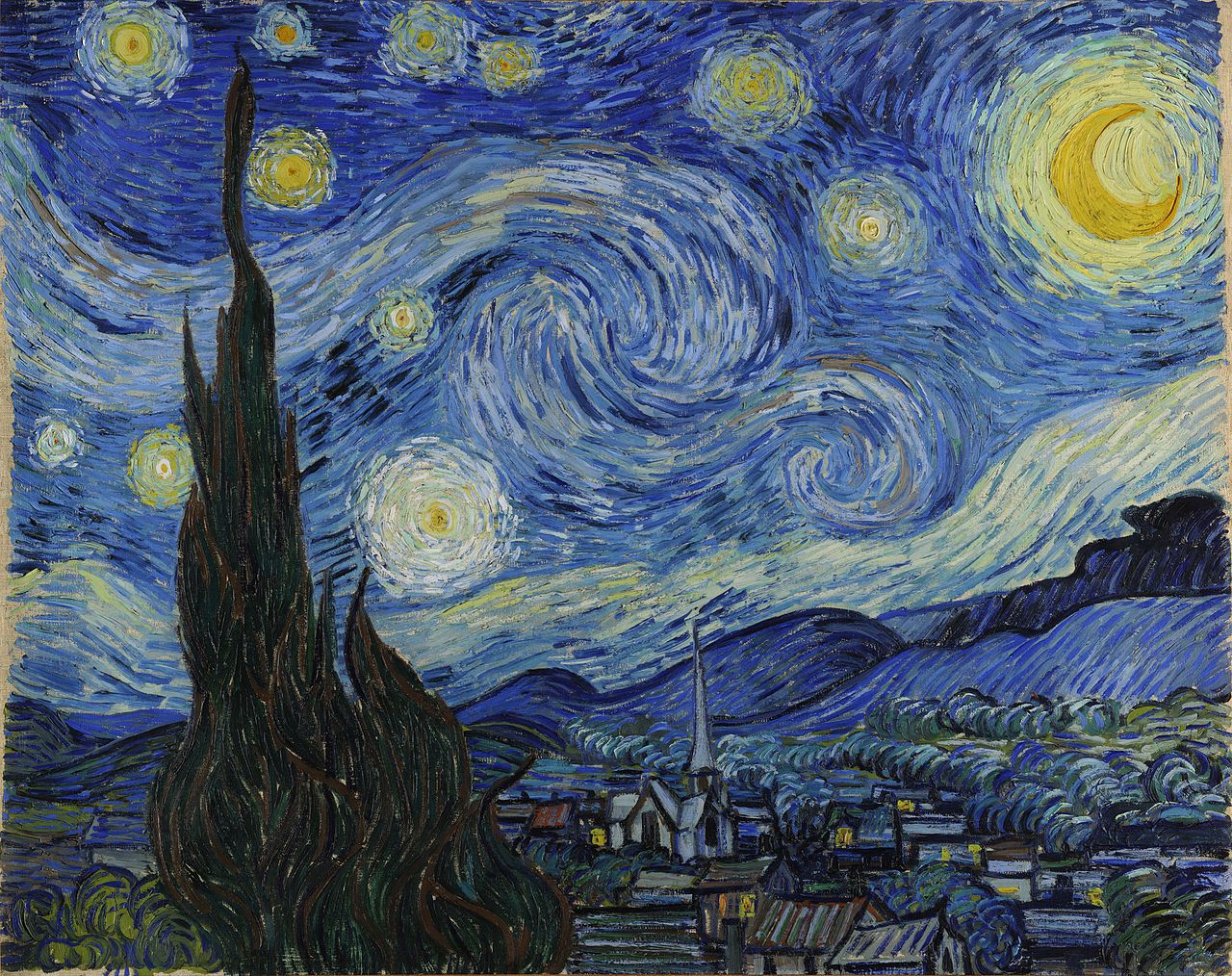
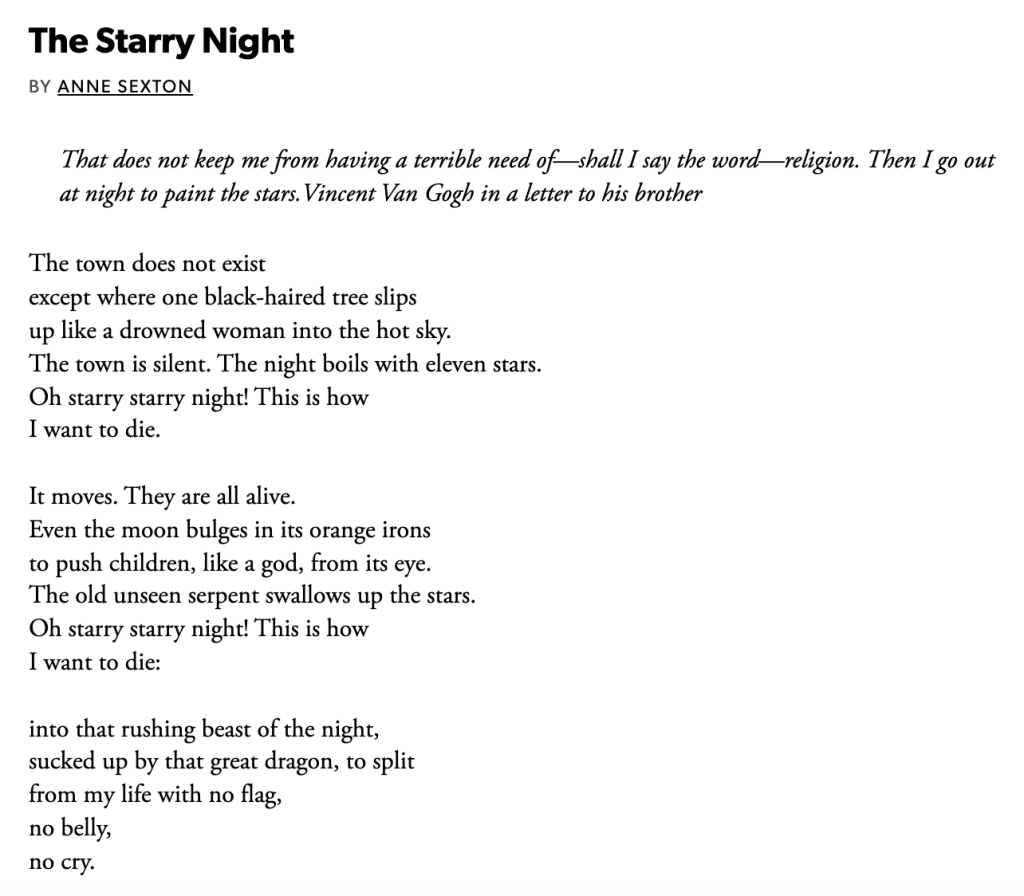
In this example, although both the painting and poem convey the same thing, we can process one almost instantly, while the other takes significantly longer. As entertainment grows shorter and shorter, reading begins to seem overtly time-consuming in comparison. Similar to reading, visual art has traditionally had a reputation for being a niche interest. But unlike reading, art can still have the same instantaneous effect on people as some more exhilarating activities do.
It would be unfair and untrue to argue that we can process writing as quickly as these other forms of entertainment; but it raises the question of what gives art its value. No matter how much or how little time it takes, I believe art is determined least of all by its length and most of all by our perspective: how we interpret it, how it can be interpreted in different ways, how it changes our perspective of other aspects of the world. Quick fixes are rarely the answer, and reading allows us to explore narratives in their purest, fullest form.
Case 3: Focus
Nowadays, much of the entertainment we enjoy is relatively easy to understand. I don’t mean this to take away from the complexity of some modern works; there are certainly nuances, themes, and other elements that are not obvious to audiences, even those who give their full attention to what they are taking in. But still, sensory elements generally make other forms of entertainment easier to understand and interpret. They don’t require all of our attention to create an experience or give us a feeling; we don’t need to give up everything else we’re doing to enjoy it. Books, on the other hand, are based on a single medium: words. Each word is part of the construction of smaller ideas, and these make up the entire story. And following that story requires continued focus. Working on something else, or even just looking away for a moment, breaks the magic of the experience.
For anyone in school, or with a job, with a family, with another hobby they already love, it’s not always easy to make time for these periods of focus. But if the problem is not being able to look away… why not listen? Audiobooks don’t necessarily make writing easier to understand, but books have a new appeal when you can better accommodate them into your lifestyle. If audiobooks are not for your taste either, you could consider poetry, short stories, or novellas. Finishing full length novels or epics can seem like a task that’s grand or looming. Shorter works can offer the same insight, pleasure, or whatever else you hope to gain from reading that longer works do; and sometimes, in less than half the time.
Case 4: Misconception
Not all books are the same. As I write this, I think this may be too obvious a thing to say. But people forget all the time. From what I’ve seen, so many people think reading isn’t for them because of a misrepresented first impression. Maybe it was required reading from school, or a bad run-in with an old classic. But there’s more to literature than old books! Some books are acclaimed, or classics, or important, and are widely read because of that; but you don’t really need to read for any other reason than yourself. There’s books of different reading levels, by different authors from different places who write in different styles about different themes: there are thousands and thousands of options to choose from. Even if you feel like you’ve already tried everything out there, I would still beg you to keep trying still; you never know what you may find.
Case 5: Interest
There are plenty of things I don’t care much about. For that same reason, there are a number of things I wouldn’t care to read about either. But I wonder how many people have missed the chance to read books about things they really cared about. Authors often write from experience, about their interests or upbringing or environment; when we have nothing in common or no interest in a book’s topic, it’s difficult to imagine that we’d be able to enjoy it.
When you’re choosing a new book, ask yourself first what you like. What’s fun for you? What do you want to learn more about? Similar to the last point on misconceptions about reading, we shouldn’t forget that books are incredibly diverse. It’s not always easy to associate reading with something fun, but the same way we spend our free time watching or doing things we like, there are sure to be books we can read about the things we love!
While I’ve just tried to convince you otherwise, there’s plenty of reasons why reading is not fun. There’s plenty of people who dislike reading, and I’m sure they each have plenty more reasons to explain why they dislike it. But my hope is, after reading this post, there’ll be a few more who’d like to pick up another book, and give it another try.
 Eye to the Glass